
Radon Testing for a Home Sale in Syracuse, NY
Fast, certified radon testing you can trust — essential before any New York home sale. Licensed & insured.
Radon Testing for a Home Sale in Syracuse, NY
A radon test is one of the most common contingencies in a Central New York real estate transaction. Because all of Onondaga County sits in EPA Radon Zone 1 — where indoor levels are predicted to average above the 4.0 pCi/L action level — buyers, agents, and inspectors routinely put radon on the table before closing. Whether you are selling, buying, or representing a client, a fast, certified radon test protects the deal and everyone in it.
Why Radon Testing Matters in a Syracuse Home Sale
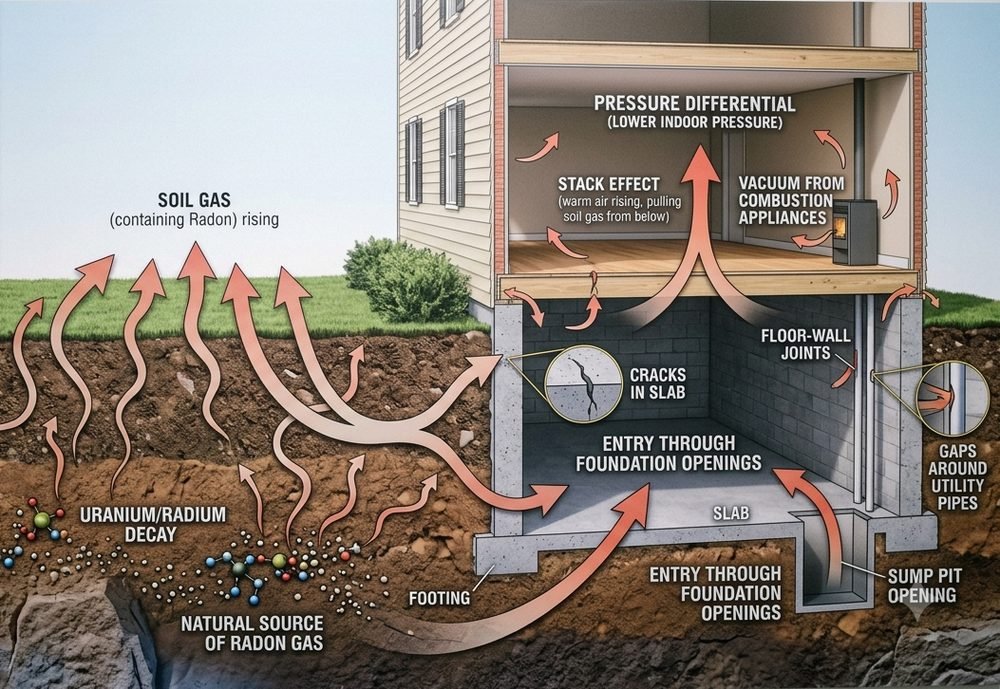
Radon is the second-leading cause of lung cancer in the United States, and in a county where roughly half of tested homes exceed the action level, buyers here have learned to ask about it. An elevated result discovered late in a transaction can stall a closing, trigger last-minute renegotiation, or send a nervous buyer walking. Handling radon early — with a certified test and, if needed, a mitigation system — turns a potential deal-breaker into a simple, documented line item.
For sellers, a clean or already-mitigated result is a selling point. For buyers, an accurate test means no surprises after you own the home. For agents, getting the radon question answered up front keeps transactions on schedule and protects everyone from a post-inspection scramble.
Radon and the Home Inspection Contingency
Radon testing is usually folded into the home inspection period. Once a purchase offer is accepted, the buyer typically has a set window — often a week to ten days — to complete inspections, and a radon test fits neatly inside it. Because the test needs time to run, scheduling it at the very start of the inspection period is critical: waiting until day eight of a ten-day window leaves no room for the results.
For real-estate transactions, a continuous radon monitor (CRM) is the preferred instrument. Unlike a passive charcoal kit, a CRM records hourly readings, is tamper-resistant, and produces a time-stamped, professional report that both sides of a transaction can rely on. It also delivers results in as little as 48 hours, which keeps a tight inspection timeline on track. If a test comes back elevated, the report becomes the basis for a fair, factual negotiation rather than guesswork.
New York Radon Disclosure Requirements for Sellers
New York’s Property Condition Disclosure Act requires sellers of most residential property to complete a disclosure statement, and radon is part of it. If a seller has knowledge of radon test results or of a radon mitigation system in the home, that information must be disclosed to the buyer. Concealing a known radon problem is exactly the kind of nondisclosure that leads to disputes after closing.
The practical takeaway for a Syracuse-area seller is simple: it is almost always better to test before you list. A pre-listing test puts you in control — you learn the home’s radon level on your own timeline, you can install and document a mitigation system before buyers ever see the property, and you enter negotiations with a known, disclosed number rather than a mid-transaction surprise. Testing early protects both the sale and you.
Radon Testing Before Closing: Timelines and Logistics
A real-estate radon test has specific conditions that protect its validity. The test is run under closed-house conditions — windows and exterior doors kept shut except for normal entry and exit — for a minimum of 48 hours, with the monitor placed in the lowest livable level of the home. For an occupied home mid-sale, coordinating those closed-house conditions with showings and daily life takes a little planning, which is another reason to start early.
Once the monitor is retrieved, a certified report is generated quickly. If the result is at or above 4.0 pCi/L and the parties agree mitigation is warranted, a sub-slab depressurization system can typically be installed within days, and a post-mitigation test confirms the fix — all of which can be completed inside a normal closing window when the process starts on time.
What Buyers, Sellers, and Agents Need to Know About Radon
Radon Testing for Home Buyers
Insist on a certified radon test during your inspection period, and schedule it first. An accurate radon reading is your only real protection against inheriting a problem you cannot see or smell. If the result is high, you have leverage to ask the seller to mitigate or credit the cost before closing.
Radon Testing for Home Sellers
Test before listing. A documented, low result reassures buyers, and an already-installed mitigation system removes radon as a negotiating chip entirely. Under New York disclosure law, any radon results or systems you know about must be reported anyway — so control the narrative early.
Radon Testing for Real Estate Agents
Raising radon proactively keeps your transactions predictable. A fast, certified test and, when needed, a quick mitigation install keep closings on schedule and your clients confident on both sides of the table.
Related: Learn more about our general radon testing in Syracuse, the continuous radon monitors we use for real-estate tests, and what happens if a test is high — our radon mitigation service.
Still weighing your options for a home sale? Our common radon questions page answers what buyers and sellers ask most.
Certified, Licensed & Insured Professionals
Radon testing in New York should be performed by professionals certified through the National Radon Proficiency Program (NRPP) or the National Radon Safety Board (NRSB) — the two EPA-recognized certification bodies. Always confirm your provider is certified before testing, so your results are accurate and accepted in a real-estate transaction.
Looking for radon testing in your area? We serve homeowners throughout the Syracuse metro and Onondaga County.
Frequently Asked Questions
When should I test for radon during a home sale?
As early as possible. Buyers should schedule the test at the very start of the inspection period, and sellers are best served testing before listing, so there is time to mitigate and document a system if needed.
Does New York require radon disclosure when selling a home?
Yes. Under New York’s Property Condition Disclosure Act, sellers must report any known radon test results or mitigation systems on the disclosure statement provided to the buyer.
What happens if the radon test is high before closing?
An elevated result is usually resolved by installing a mitigation system, often within days, followed by a confirming test. It typically becomes a straightforward negotiation over who arranges and pays for the fix.
Serving Syracuse and the surrounding Onondaga County communities including Cicero, Liverpool, Baldwinsville, Camillus, Manlius, DeWitt, Lysander, North Syracuse, East Syracuse, Skaneateles, and Fayetteville.
Where We Test: We provide radon testing for home sales across Onondaga County, including Syracuse, Cicero, Liverpool, Baldwinsville, Camillus, Manlius, DeWitt, Lysander, North Syracuse, East Syracuse, Skaneateles, and Fayetteville.