
Syracuse’s Certified Radon Testing & Mitigation Experts
Fast, accurate radon testing and permanent mitigation systems across Syracuse & Onondaga County — an EPA Zone 1 high-risk area. Licensed, insured, and local.
✓ NRPP/NRSB-Certified Professionals · ✓ Licensed & Insured Professionals · ✓ Free Estimates · ✓ Fast Local Scheduling
Syracuse Radon Mitigation & Testing
We provide professional radon mitigation, radon testing, and radon system repair across Syracuse and the surrounding Onondaga County towns. Radon mitigation — sometimes called radon abatement, radon removal, or radon remediation — reduces indoor radon to a safe level. Onondaga County sits in EPA Radon Zone 1 — the highest-risk category, where indoor radon is predicted to average above the EPA’s 4.0 pCi/L action level. If you haven’t tested, now is the time. Call for fast local scheduling and a free estimate.
How Our Radon Process Works
Radon Services in Syracuse, NY
We’re your local team for radon testing, mitigation system design and installation, real estate radon inspections, and repair of failed or aging systems. Certified professionals. Honest guidance. Fast scheduling across the Syracuse metro.
Radon Testing
Accurate, tamper-resistant continuous monitor testing for homes and real estate transactions.
Radon Mitigation
Permanent sub-slab depressurization systems that keep levels safely below 4.0 pCi/L.
System Repair
Fan replacement and repair to keep an existing radon system running as it should.
- Certified professionals. NRPP/NRSB-certified radon testing and mitigation.
- Professionals in Onondaga County who know the region’s Zone 1 soils and housing stock.
- Licensed & insured professionals. Full coverage, proper credentials.
- Fast scheduling. Quick turnaround for testing and real estate deadlines.
- Honest guidance. Test first and recommend only what your home needs.
- Results focused. Systems designed to bring levels below the EPA action level.
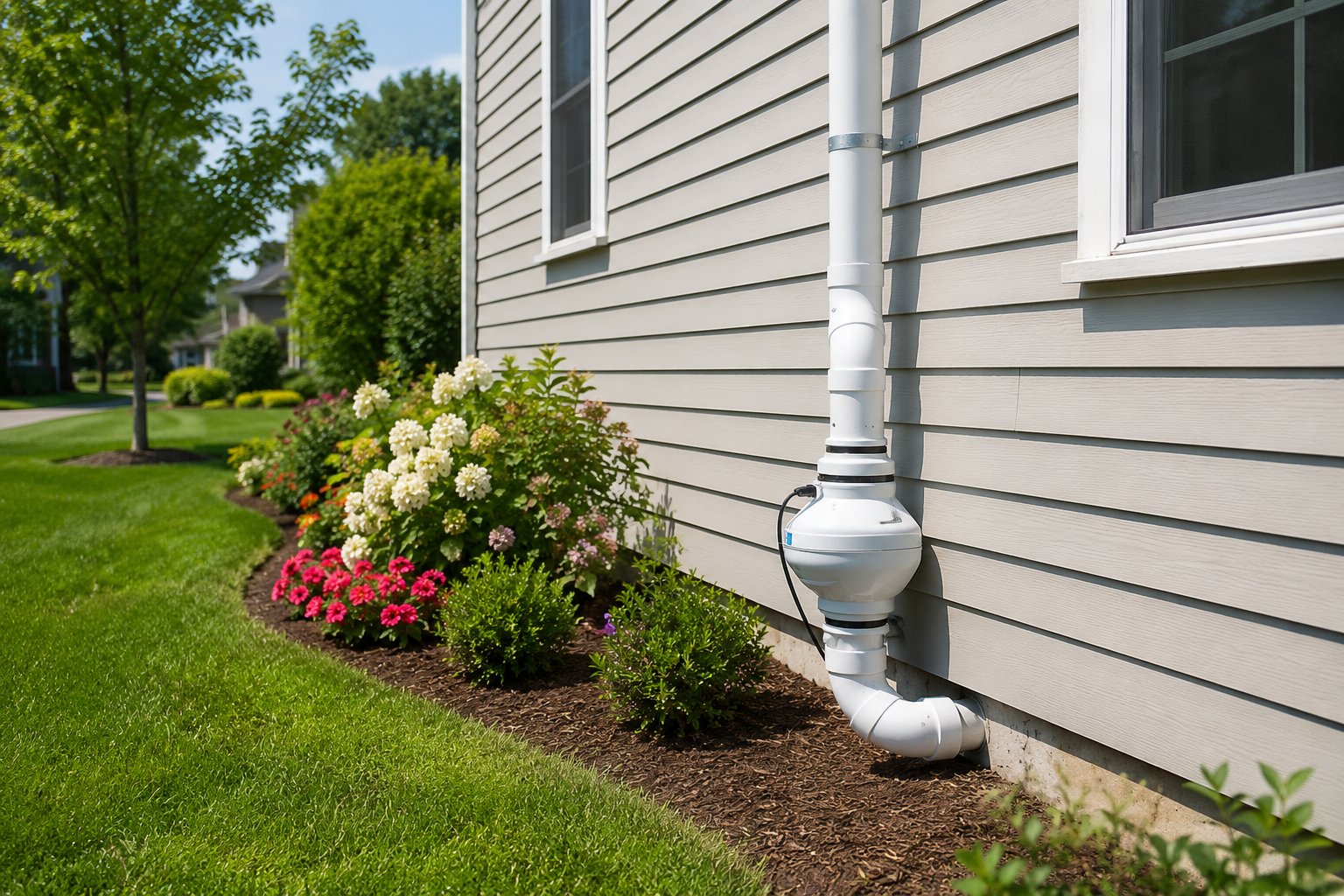
Radon Mitigation Contractors in Syracuse
Certified installers design and size each system to the specific home.
If your home has tested at or above 4.0 pCi/L, a radon mitigation system is the permanent fix. The most common and effective approach is active sub-slab depressurization (ASD) — a sealed vent pipe and a specialized in-line fan that draws radon from beneath your foundation and safely exhausts it above the roofline, before it can enter your living space.
Every home is different. A certified mitigation professional evaluates your foundation type — full basement, crawl space, slab, or a mix common in older Syracuse housing — and designs the system around it. Most systems are installed in a single day. Most Syracuse-area mitigation systems run based on your home’s size and foundation, depending on foundation type, home size, and system complexity.
Set that one-time, one-day upgrade against what radon actually is: the #2 leading cause of lung cancer in the U.S., and a disclosure item that can stall a New York home sale. Testing and fixing is cheap insurance.
Typical Radon Costs in the Syracuse Area
Radon Testing: an affordable, one-time cost | Radon Mitigation: based on your home’s size and foundation
Final pricing depends on your foundation type, home size, and system complexity. We always provide a clear, free estimate before any work begins.
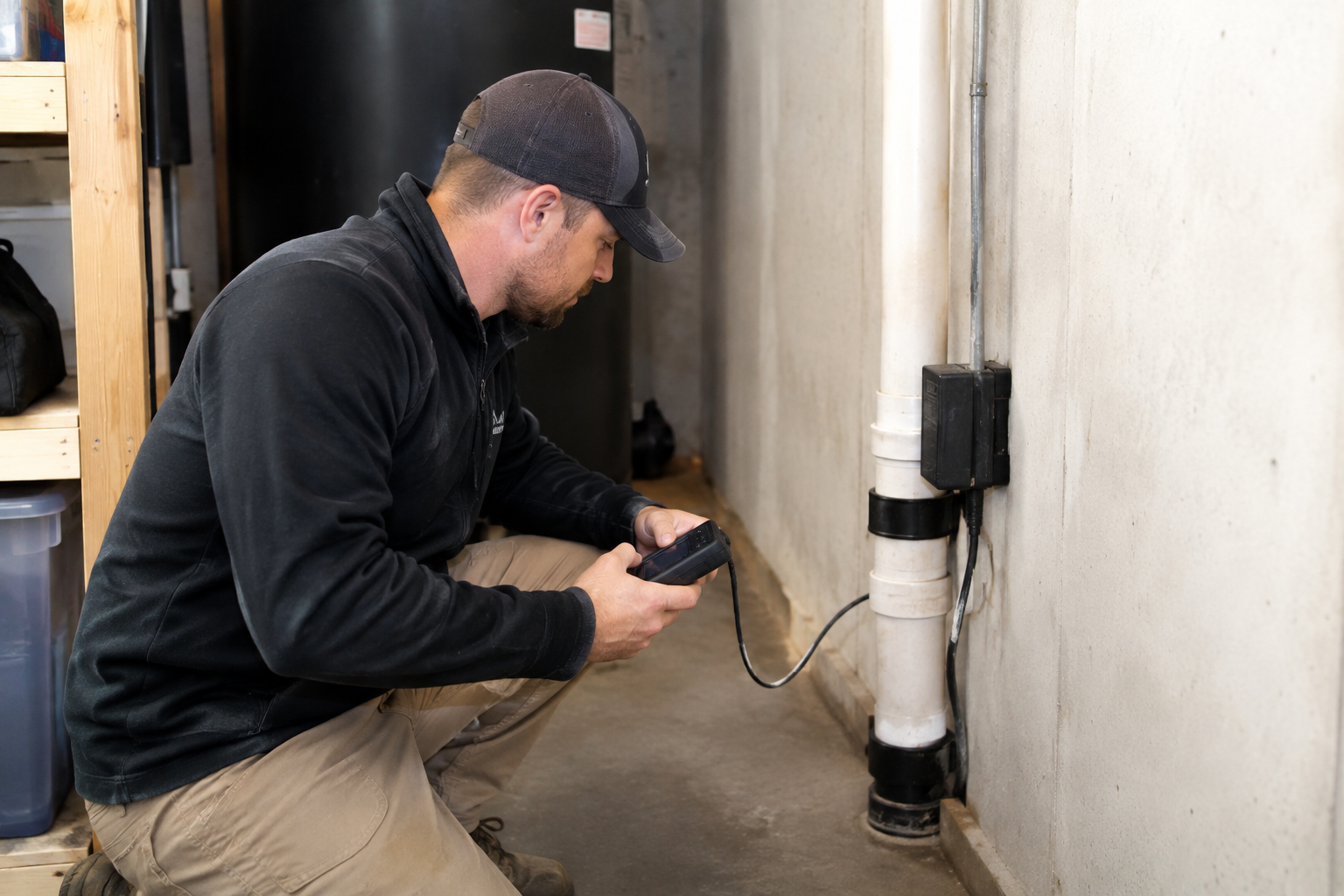
Radon Testing in Syracuse
The only way to know your home’s radon level is to test. We use continuous radon monitors (CRMs) for fast, tamper-resistant results — typically within 48 hours — rather than slower passive kits that leave more room for error.
Testing is essential in two situations: any Onondaga County home that hasn’t been tested in the last few years, and any home being bought or sold in New York, where radon results are addressed on the state’s Property Condition Disclosure Statement. A professional short-term test is an affordable, one-time cost, and is often included in a home inspection.
Worried about radon in your Syracuse home? Get certified testing scheduled fast.
Radon in Onondaga County: Why It Matters Here
Radon is not evenly distributed across the country, and Central New York sits in one of its higher-risk zones. The Onondaga County Health Department reports an average basement radon concentration of 8.1 pCi/L. The EPA recommends corrective action at 4.0 pCi/L, so the typical county basement measures roughly double the level at which mitigation is advised, and close to half of all homes tested countywide come back above the action level.
By comparison, the New York State Department of Health estimates that about 18 percent of homes statewide exceed 4.0 pCi/L in basement screening. Onondaga County runs at roughly three times the state rate, which is why the EPA assigns the entire county its Radon Zone 1 designation, the highest of three risk classifications.
The reason lies in the ground beneath the region. Central New York sits on Silurian and Devonian sedimentary bedrock, including the Salina Group salt and shale beds that gave Syracuse its Salt City nickname and the Onondaga Limestone that forms the escarpment running through the southern and eastern towns. These formations carry trace uranium, which decays through radium into radon gas. Where the rock is fractured, channeled by groundwater, or disturbed, that gas migrates upward and collects beneath building foundations. Local conditions vary widely from town to town, which is why testing individual homes matters throughout the metro area, from the lake plain around Cicero and Liverpool to the limestone country of Manlius and DeWitt.
These are county and regional figures. They establish that radon is common here, but they cannot predict the level in any single home. Two houses on the same street can measure very differently depending on foundation type, basement use, and how tightly the home is sealed. The only way to know a specific property is to test it.
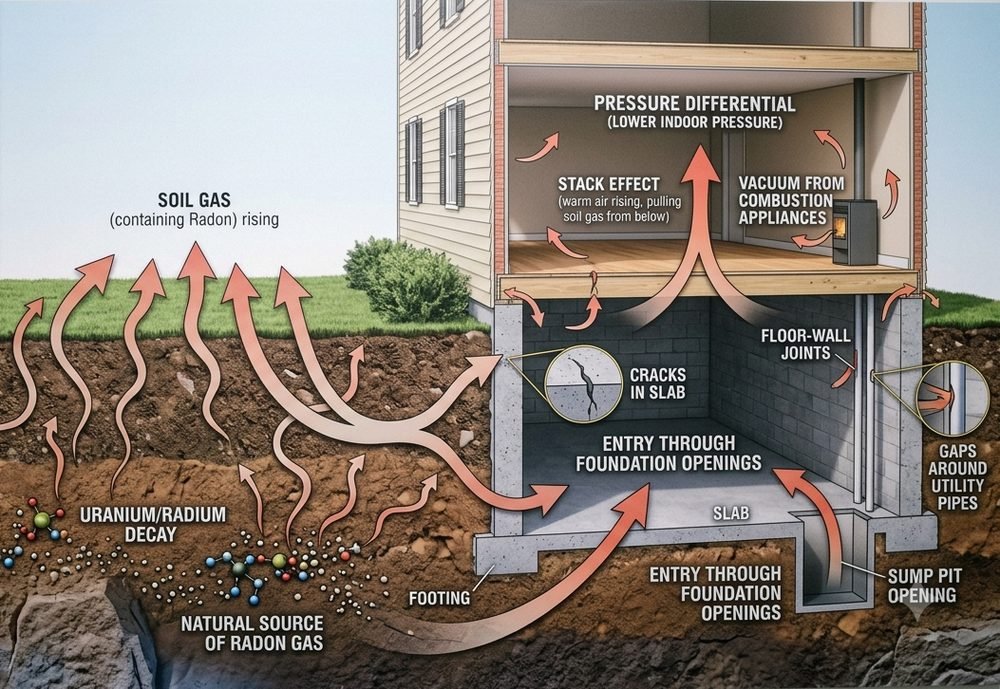
Onondaga County is classified by the EPA as Radon Zone 1 — the highest-risk designation, predicting an average indoor radon screening level greater than 4.0 pCi/L. The region’s glacial deposits over sedimentary and limestone bedrock create natural pathways for radon gas to migrate up from the soil and accumulate in basements and lower levels. Older homes, newer homes, homes with basements, and homes on slabs can all have elevated radon — the only way to know is to test.
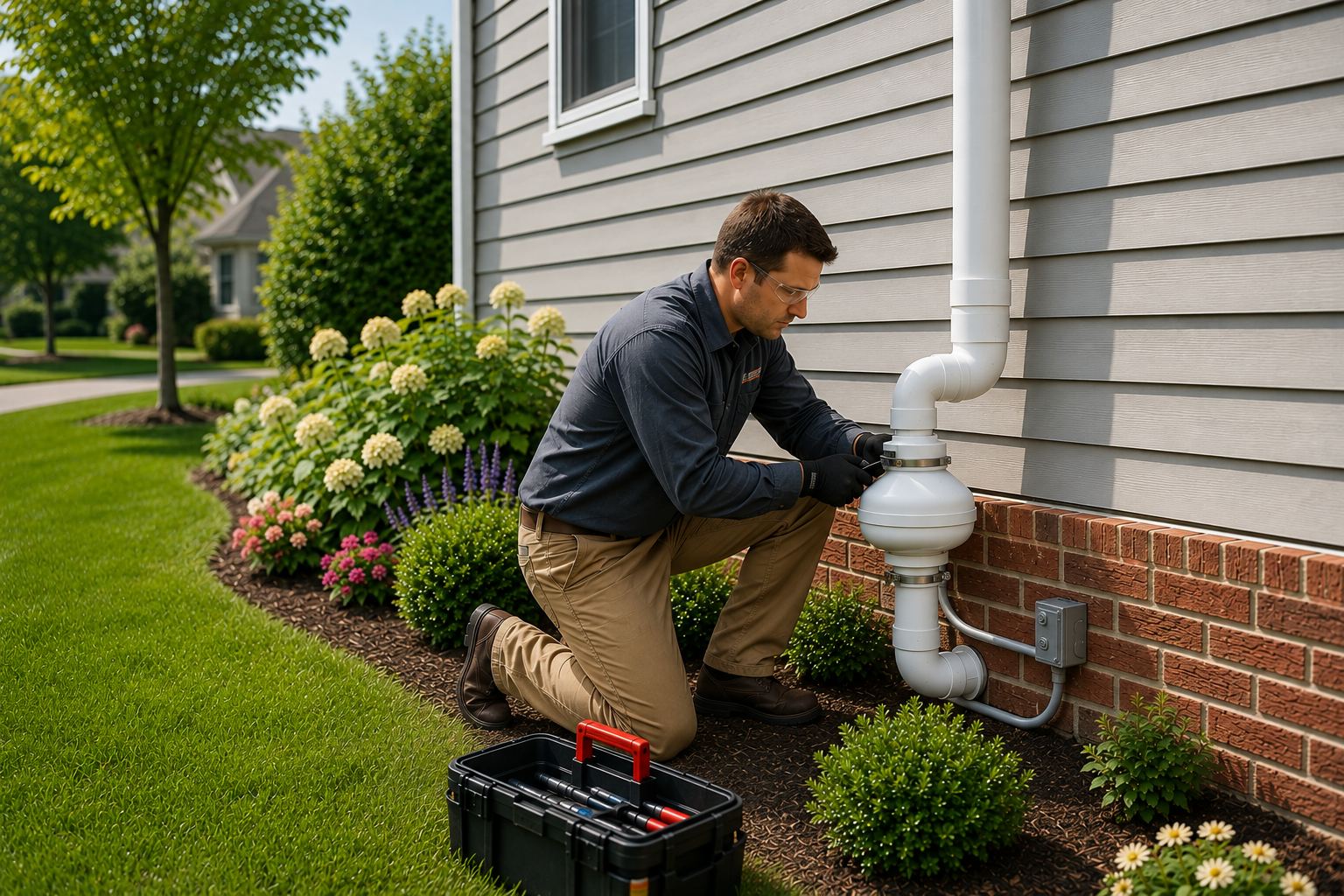
Use a Certified Radon Professional
Radon work in New York should be performed by professionals certified through the National Radon Proficiency Program (NRPP) or the National Radon Safety Board (NRSB) — the two EPA-recognized national certification bodies. New York’s Department of Health maintains a list of certified radon mitigation contractors. Always confirm your provider is certified, licensed, and insured before work begins.
Our Syracuse Metro Service Area
Radon Service Near You: Syracuse Metro
We serve Syracuse and the surrounding Onondaga County communities:
Syracuse Cicero Liverpool Baldwinsville Camillus Manlius DeWitt Lysander North Syracuse East Syracuse Skaneateles Fayetteville
Serving Onondaga County and nearby areas. Don’t see your town? Call — chances are we cover you.
Why Work With Us
Request Your Free Radon Quote
Tell us a little about your home and a certified radon professional will get back to you quickly with a free, no-obligation estimate.
Frequently Asked Questions
Have more questions? See our full page of honest answers to common radon questions in Syracuse.
How much does radon mitigation cost in Syracuse?
Most Syracuse-area radon mitigation systems can run based on your home’s size and foundation, depending on your foundation type, home size, and how complex the system needs to be. We give you a clear estimate before any work begins.
Do I need a radon test before selling my home in New York?
New York addresses radon on the state’s Property Condition Disclosure Statement, and if your home has been tested, those results must be disclosed to buyers. Many buyers also request a radon test during the inspection period. Testing before you list removes a common last-minute surprise.
What radon level requires mitigation?
The EPA recommends action at or above 4.0 pCi/L. Onondaga County is a Zone 1 area, where levels above that threshold are common, so testing is strongly recommended for every home.
How long does radon mitigation take?
Most residential systems are installed in a single day. We retest afterward to confirm the system brought levels below the action level.
How is radon testing done?
We place a continuous radon monitor in the lowest livable level of your home under closed-house conditions, typically for 48 hours, then provide certified results.
Is radon really a problem in Syracuse?
Yes. Onondaga County is EPA Radon Zone 1 — the highest-risk category. Radon is the #2 leading cause of lung cancer in the U.S. The only way to know your home’s level is to test.
Certified radon testing and mitigation across Syracuse and Onondaga County. Licensed, insured, fast, and local. Call today for a free quote.